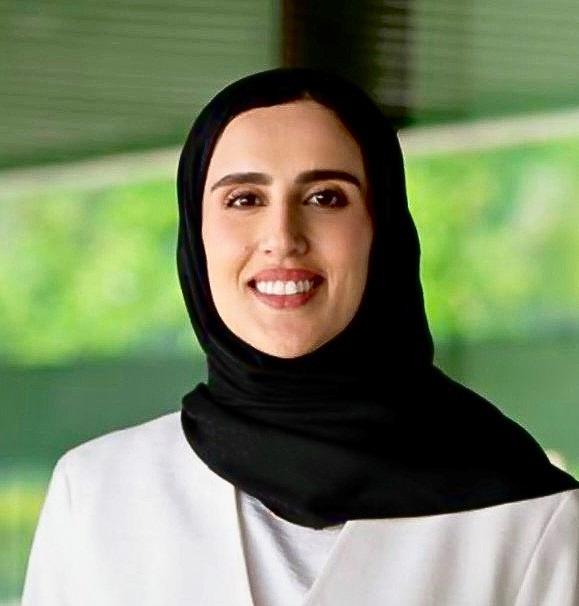
Bushra AlZamil is Director of Strategy & Board Excellence at a sovereign wealth fund-backed international energy services group, a non-executive board member, and an Adjunct Professor at IE University, the Madrid-based business school known for its entrepreneurship and leadership programs. With more than a decade of experience spanning joint venture governance, board secretariat, and board effectiveness, she focuses on aligning governance with strategic priorities.
Bushra spoke to Board Intelligence about what her experience has taught her about the importance of shareholder alignment and how to achieve it, what it takes for boards to operate at full potential, and what good AI governance looks like in practice.
How has over a decade in governance shaped what good governance looks like to you in practice?
After more than a decade of working inside a variety of governance structures and with many boards, I've come to one conclusion: governance is far less about process than people. Structures and policies provide the infrastructure, but people determine the outcome, and no governance framework can make up for weak trust, poor judgement, or unclear roles.
As a board secretary, I saw this repeatedly: the same governance structures could produce very different outcomes depending on the people around the table. Often, the difference was a well-timed question, the willingness to challenge an assumption, or creating space for management to say what was not obvious from the board papers.
Directors show this in practice through curiosity over certainty, challenge without confrontation, and the discipline to place the company's long-term interests above individual agendas. These behaviours, more than any framework or policy, determine how effective a board is.
Each role has reinforced that from a different angle. As a board secretary, I saw how much governance depends on preparation and follow-through. You can have excellent processes, but if the right conversations are not happening, governance quickly becomes procedural rather than effective. As a board member, I saw how the responsibility becomes personal. You make decisions with incomplete information and carry fiduciary duties that cannot be delegated.
Through my current role as Director - Strategy & Board Excellence, I gained the shareholder perspective and the importance of ensuring boards have the capabilities required for the company's specific stage, strategy, and challenges. It's also shown me how much clarity over roles matters. Directors need to understand whose interests they serve, what they're expected to achieve, and why they were brought onto the board in the first place. Ultimately, good governance is a mindset.
You've also worked across a portfolio of joint ventures. Where do shareholders let governance slip, and how do you fix it?
Governance in joint ventures rarely breaks down because shareholders lack an agreement. More often, it breaks down because the relationship evolves beyond what the agreement originally anticipated. Joint ventures cannot be governed as though markets, strategies, and shareholder priorities are static. They need to adapt deliberately as circumstances change.
At the outset, shareholders typically come together around a clear source of mutual value. One shareholder might bring access to a market where the other has no footprint, while the other brings the capital or offering the first one lacks. Over time, however, strategies evolve, markets shift, leadership changes, and shareholder priorities naturally diverge. One shareholder may prioritise growth, another returns, and another control or capital discipline. Those differences are not the problem. The problem is when they go unspoken. When that happens, boards can become a forum for unresolved shareholder tensions rather than the stewardship of the company. Management receives mixed signals, decision-making slows down, and performance suffers.
In my experience, the most effective approach is to establish clarity early and revisit it regularly: why the venture exists, what value it was created to deliver, and whether that shared source of benefit still holds. That often means revisiting the strategic rationale, investment appetite, operating model, and even governance arrangements themselves as circumstances evolve.
The most successful joint ventures are not those without competing interests. They are the ones where those interests are surfaced early, addressed constructively, and anchored to a shared view of long-term value creation. Ultimately, joint ventures work when shareholders remain focused on why they came together in the first place, while being honest about how their priorities have evolved over time.
Saudi Arabia is reshaping how companies operate and are governed under Vision 2030. What does that mean for boards in practice?
Saudi Vision 2030 is fundamentally changing the environment in which companies operate. We are seeing organisations enter entirely new sectors, pursue ambitious growth agendas, build more complex partnerships, and compete in new ways. At the same time, expectations around localisation, capability building, sustainability, and national impact continue to rise. When the pace and scale of change increase, the role of the board inevitably changes with it.
The board's role used to be largely about compliance and periodic oversight. Now it requires much deeper engagement with strategy, growth, and organisational readiness. The challenge for boards in the region is balancing ambition with discipline. In a fast-moving environment, it is easy to mistake pace for progress. Strong boards create space to challenge assumptions, test whether the organisation has the capabilities to deliver, and ensure growth does not outpace governance, controls, or execution capacity.
There is also growing interest in board service among younger professionals, and I think that is a very positive shift. Just under two thirds of Saudi Arabia's population is under 30, and many of the CEOs leading Vision 2030 companies are now in their forties, this generational shift is already actively shaping executive leadership. Saudi Arabia's young demographic and the surge in demand for governance make this the ideal moment for boards to invest deliberately in the next generation of directors, building capability through mentorship, exposure, and experience.
If we do that well, boards will benefit from a powerful combination of perspectives: directors with foresight who understand disruption, emerging technologies, and the forces reshaping industries, alongside directors whose experience helps them recognise patterns, understand how decisions play out over time, and distinguish between what is simply hype and what will create enduring value. If we get that balance right, the next generation of boards will be exceptional.
Board Intelligence found only 23% of directors feel their board works at full potential. What would change that?
In my experience, the gap is often behavioural and relational. A board may be well qualified and fully compliant, yet still fall short if its purpose is unclear, trust is limited, or directors hesitate to challenge one another.
Boards need a shared understanding of what they are there to achieve beyond formal oversight: which decisions require board attention, what management needs from them, and how success will be measured. Without this clarity, capable directors can end up focused on the wrong issues or working from different assumptions. A high-performing board must look ahead, not only review the past. It should test the relevance of the business model, anticipate shifts in markets and stakeholder expectations, and ask whether the company is ready for what is changing around it.
The chair plays a critical role in shaping that environment. A strong chair makes the room more effective by enabling open disagreement, ensuring people listen properly, and guiding the board toward decisions without allowing personalities or dynamics to dominate.
It also requires more candid board effectiveness discussions. Rather than a generic annual exercise, the board should openly assess whether it is spending time on the right matters, whether each director is contributing meaningfully, and whether difficult issues are being raised early enough.
One experience that shaped my thinking involved a company whose ownership and strategic context had changed significantly, while its governance structure still largely reflected an earlier stage of its development. What initially looked like a question of board effectiveness became a more fundamental question: was this still the right board for the company it was governing? We stepped back and reconsidered the board’s size, composition, committee structure and mandate against what the business now required. It reinforced something I strongly believe: before evaluating individual directors, you first need to ask whether you have designed the right board.
What does good AI governance look like, and where are boards still falling short?
I think the first question boards should ask is: what exactly are we governing?
Are we governing the internal use of AI tools to improve productivity and efficiency? Or are we governing how AI may fundamentally reshape the company’s business model, competitive position, and long-term strategy? Those are very different conversations, and they require different levels of board attention.
At the operational level, good AI governance is about responsible use. Boards should ensure there are clear policies around approved tools and employee use. That’s the baseline.
But the more important conversation is strategic. If AI is changing customer expectations, disrupting industries, or redesigning work, the board should be asking whether the business itself needs to evolve. Where could AI create competitive advantage? Which capabilities will matter in the future? What risks are we not seeing?
The board also needs to understand where AI is being used and how much authority it is is being given. There is a significant difference between using AI to summarise a report and using it to influence decisions around safety, capital allocation, or workforce design. As AI moves from informing decisions to shaping them, governance becomes far more consequential.
And finally, I don’t think directors need to be technical experts. What they do need is curiosity, the willingness to learn, and enough fluency to distinguish genuine strategic value from hype.
You recently completed an AI co-teaching certificate at IE University. How has that changed how you think about AI in the boardroom?
I loved this question because it's something I reflected on throughout the course, and it made me appreciate the role of the board director even more. Working with the experts on AI use cases, I saw both its strengths and its limitations first hand. I see AI as an extraordinary tool for research and preparation, and I see too how easily people confuse speed with understanding, confidence with accuracy, and analysis with judgement.
During the course, we discussed the idea of an AI board member as a thought exercise. Through it, I came to see clearly what a board contributes: judgement built through experience, context, and the ability to see how decisions unfold over time.
Boards aren't supposed to be efficient, they're supposed to be effective, and their effectiveness is in their judgement, which is built with experience, contextual understanding, and seeing how decisions unfold over time. AI can support that, with access to information, spotting patterns, and running simulations that make preparation more efficient. But it will never replace the human dimension of board decision-making; the accountability, the ethical judgement, and the ability to understand consequences beyond what's visible in the data itself. As AI makes access to information increasingly abundant, independent judgement becomes more critical, and the board's stewardship role becomes even more valuable.
Board Intelligence ran webinars on the boardroom's next ten years. What shifts do you expect, and how should boards prepare?
I think the biggest shift we can expect in how boards work is that they will increasingly need to govern for tomorrow. In a world shaped by technological, economic, and societal change, many of the assumptions, systems, and models that drove success in the past may become less reliable guides for the future. For me, the critical capability is strategic foresight. Boards have always been responsible for stewardship, but stewardship should not be confused with preservation. Protecting legacy systems, structures, or ways of working simply because they once worked can become a risk.
Boards should regularly challenge whether their governance and composition are aligned with where the business needs to go, not where it has been. They should also invest in building a pipeline of capable directors through mentoring, reverse mentoring, and shadowing opportunities that bring together experience, fresh perspectives, and future-oriented thinking. Their role is not simply to protect what has been built, but to ensure the organisation remains capable of thriving in what comes next.
If you were to join another board in Saudi Arabia tomorrow, what would be the first question you'd ask as a board member?
The first question I’d ask is: “What’s the company’s immediate priority, and why has the board decided it needs someone like me at this point in its journey?”
Every board appointment should solve a governance need, not simply fill a vacant seat; a strategy shift, a capability gap, or a current challenge within management or the board itself that a change in the mix would serve. Before I think about what I can contribute, I want to understand what the company is trying to achieve through its board.
That’s what shapes how I prepare and where I focus from day one. It tells me far more than the board papers do; where I can add value, and how my experience complements the rest of the table.
Register for our newsletter to get a monthly compilation of our latest chair interviews, governance research, and upcoming webinars and events, along with weekly round-ups of the top news that matter to board members.
Register Now