Nearly half of directors say their board doesn't add enough value. A third say it adds no value at all.
These are the findings of the Board Value Index, Board Intelligence's twice-yearly survey of more than 200 directors in the UK and US. The biggest barriers directors cite are rigid processes, poor time management, and low-quality information. These are the conditions that make real debate impossible.
Board adviser Barry Gamble and Dineshi Ramesh, Director, Board Review Practice at Board Intelligence, have spent decades working on this problem. Here's what they've found.
What is debate, and why does it matter?
Debate, in the context of the boardroom, is the thorough exploration of alternatives before a decision is taken.
For Dineshi, the point of debate in the boardroom is not simply to exchange views. It is to arrive somewhere as a board that you couldn't have reached alone. "A good debate changes perspectives," she says. "It leverages the collective knowledge and intelligence in the room. You might change the way you think about a topic, or the way you decide about it. Even broadening your view is a form of change." Good boardroom debate therefore sharpens a director's ability to steer and supervise, and it drives better decisions as a result.
In Barry's experience, what happens in practice is something closer to endorsement. A well-prepared paper lands, the framing clear, the recommendation compelling, the logic hard to fault. Someone asks whether there are any points. There aren't, and the board moves on. The process feels efficient, but it is not effective.
Barry is clear that the value of real debate is not to create conflict but to strengthen decisions. When a board explores alternatives, including the opposite of its intended course of action, and still arrives at the same conclusion, it arrives there with far greater coherence and conviction. The decision is stronger because it has been tested. And when the exploration reveals something unexpected, a flaw in the logic or a risk that hadn't surfaced, the board can act on it rather than discover it later.
The broadcast problem
Some directors arrive with a view already formed, share it, and move on without truly taking in what others are saying. Barry calls it "broadcast mode." Real listening, he argues, is treated as something that happens in the gaps between speaking, when it should be the foundation of the whole conversation.
Dineshi sees the same pattern and traces it to something more uncomfortable. "So much of what gets in the way is a fear of looking bad," she says. "People don't put it in such simple terms, but what they're doing is protecting their egos and their positions." What drives debate, she argues, is the opposite: genuine curiosity, asking questions, and being willing to admit what you don't know. "When someone says 'I don't know what you're talking about,' it opens up a rich discussion."
When you listen carefully to a view you disagree with, you give yourself the chance to understand it and sometimes to be changed by it. That is where insight lives.
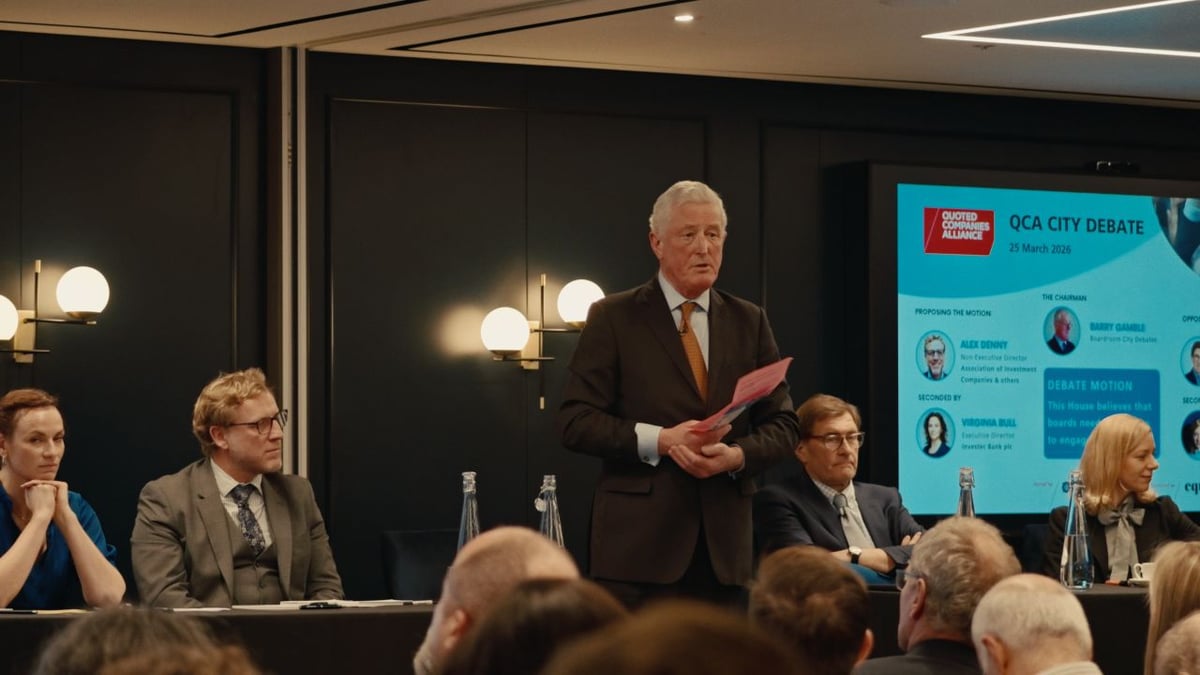
The Boardroom City Debates have demonstrated this repeatedly. In one recent debate on whether boards need to do more to engage with investors, 75% of participants voted in favour before the discussion began. After arguments on both sides and contributions from those present, that number fell to 58%. Those in attendance had not been persuaded to the opposite view. But there was a richer understanding of the opposing argument, and a clearer sense of what the two sides held in common.
What good debate looks like in practice
Barry is clear that good debate does not require antagonism. Properly framed, argument is preceded by careful listening and underpinned by respect. It is constructive challenge in a civilised environment.
Barry is direct on this point. The assumption that disagreement requires rudeness has given argument a bad name. "Far better to listen carefully to a view you disagree with, reflect on it, and then offer a counter-argument with energy and conviction but always with courtesy," he says. "In doing so, you may find shades of grey you hadn't seen before. You may even change your mind. That is the point."
But Barry is equally clear that civility should not become a constraint on candour. Board directors need to be willing to say the thing that feels uncomfortable, to question assumptions that everyone else is treating as settled.
What enables constructive challenge in a boardroom setting? Three things stand out.
1. Chairing sets the tone
Effective chairing draws out quieter voices. A process which is alert to whether the board is really getting inside an issue. The chair is prepared to say out loud "I'm not quite following this," because if a director can't follow it, the thinking probably isn't clear enough.
Dineshi goes further. The most powerful thing a chair can do, she says, is lead by example, not through authority, but through vulnerability. "Give something of yourself and then state the challenge. When you display that you're fallible, you make it okay for others to say, we didn't do that, or we failed to do this. You're giving them the opportunity to be honest, because the way you've framed it is asking for that."
2. The agenda has to protect time for debate
By the time a board has worked through compliance and routine business, directors are tired. If debate is always last on the agenda, it will always be shortchanged. That means thinking carefully about how the agenda is structured long before directors arrive in the room. The most pressing issues belong at the top. As Barry puts it: "When you've got the proverbial elephant in the room, people are distracted mentally until you get to it."
3. The quality of the debate is only as good as the quality of the board papers
A paper that arrives pre-framed around a single recommendation makes challenge almost impossible. The logic feels complete, the conclusion inevitable. As Barry observes, the board simply moves on. Papers that lay out the questions the board needs to answer and present alternatives honestly are what create the conditions for a productive conversation. Dineshi is equally direct: directors who prepare well ask better questions, but only if the paper gives them something to work with.
Where boards most often fall short
The failure of the Royal Bank of Scotland and its disastrous acquisition of ABN AMRO in 2008 is, for Barry, a cautionary tale about what happens when the conditions for debate are not in place. The Financial Services Authority's subsequent report made clear that board directors did raise questions. But the culture surrounding the board, and the sheer weight of the machine behind the chief executive's recommendation, made it almost impossible for those questions to gain traction. Challenge existed, but debate did not.
That pattern is not as rare as boards would like to think. The biggest barriers to high-quality decision-making identified in our Board Value Index are rigidity and inconsistency in decision-making processes, unclear roles and responsibilities, poor time management in meetings, and poor-quality information. These are all process failures, and all of them can be addressed.
Making debate a habit, not an event
The Boardroom City Debates are valuable because they create a structured, disciplined environment for exploring difficult questions, one that forces listening, surfaces the shades of grey between opposing positions, protects quieter voices, and produces better thinking. It is a model boards can learn from.
But debate cannot only happen at set-piece events. It needs to be built into how the board works, meeting by meeting. That starts with the chair asking, regularly and sincerely, whether the board is really getting inside the issues it needs to decide on. It continues with papers that are structured around the right questions rather than built around a single answer. It requires an agenda designed to protect time and energy for the conversations that matter most. And it demands a culture in which directors feel genuinely comfortable raising the thing that nobody else has said yet.
Dineshi is clear about where individual directors can start. Reading the board pack, she says, is not preparation. "Full preparation is reading the pack and then asking yourself a series of questions. What have they missed? What are my prejudices on this subject? If one of our investors were here, what would they ask? Who isn't in the room whose voice would be valuable? That is all preparation. It goes beyond just reading time." Thorough preparation, she argues, is what separates a director who moves a conversation forward from one who wastes the room's time. Tools like Insight Driver, available within the Board Intelligence board portal, are designed to help directors do exactly that, surfacing what matters, flagging blind spots, and ensuring they arrive ready to contribute.
For boards that want an honest picture of where they are, a board effectiveness review is often the right place to start. The board that builds those habits will make better decisions. The evidence suggests many boards have further to go than they realise.

With the “easiest to use board portal on the market”, powered by enterprise-grade security, first-rate support, and features that set your board and governance team up to succeed.
Book a demonstrationFAQs
-
What is debate in the context of the boardroom?
Boardroom debate is the thorough exploration of alternatives before a decision is taken, going beyond questioning a recommendation to genuinely examining the alternative courses of action, stress-testing the assumptions behind decision taking and arriving at a conclusion that has been properly tested.
-
What gets in the way of good boardroom debate?
The most common barriers to good boardroom debate are overloaded agendas, board papers framed around a single recommendation, a culture in which challenge feels risky, and directors who arrive in broadcast mode, focused on making their point rather than listening.
-
What's the difference between debate and conflict?
Good boardroom debate is not antagonistic. It is a disciplined and civilised process that requires careful listening, respect for opposing views, and a shared commitment to reaching the best decision, not winning the argument.
-
How can boards build better debating habits?
Boards that want to debate better should start by protecting time on the agenda for the conversations that matter most, structuring papers around the questions that need answering rather than the answer management wants to give, and building a culture where directors feel safe to raise the thing nobody else has said.